UK immersive, VR and AR developers
Above: Riptide: Intermission, Leeds, 2023. Photo: @jma.photo.
Virtual reality and augmented reality development, when putting people inside something is the best way to show it
Reflex Arc is an immersive technology studio in Leeds, building virtual, augmented and mixed reality. As UK VR developers we’ve built virtual reality for schools, film sets, arcades, museums, councils and live robot fights, and augmented reality for one of the best-known painters of his time. Clients come to us from across the UK and abroad.
Built with: Unity, Unreal Engine, Meta Quest, HTC Vive, iPhone, iPad and Android AR, plus whatever physical kit the idea needs: motion platforms, real bikes, train seats
In short
VR and AR are one part of what we do, not all of it. We start from what you’re trying to achieve and what people should come away with. Sometimes that’s a headset. Sometimes it’s a tablet, a big screen or a web app, and we’ll say so. When immersion is the right tool, we build all of it: the 3D scenes, the interaction, multi-user servers, data capture, the hardware links and the performance work that keeps it smooth in a headset.
Three projects that show what we do
Virtual Plant Cell: biology from the inside
For: the ARC Centre of Excellence in Plant Energy Biology, 2017–2018. Built in Unity.
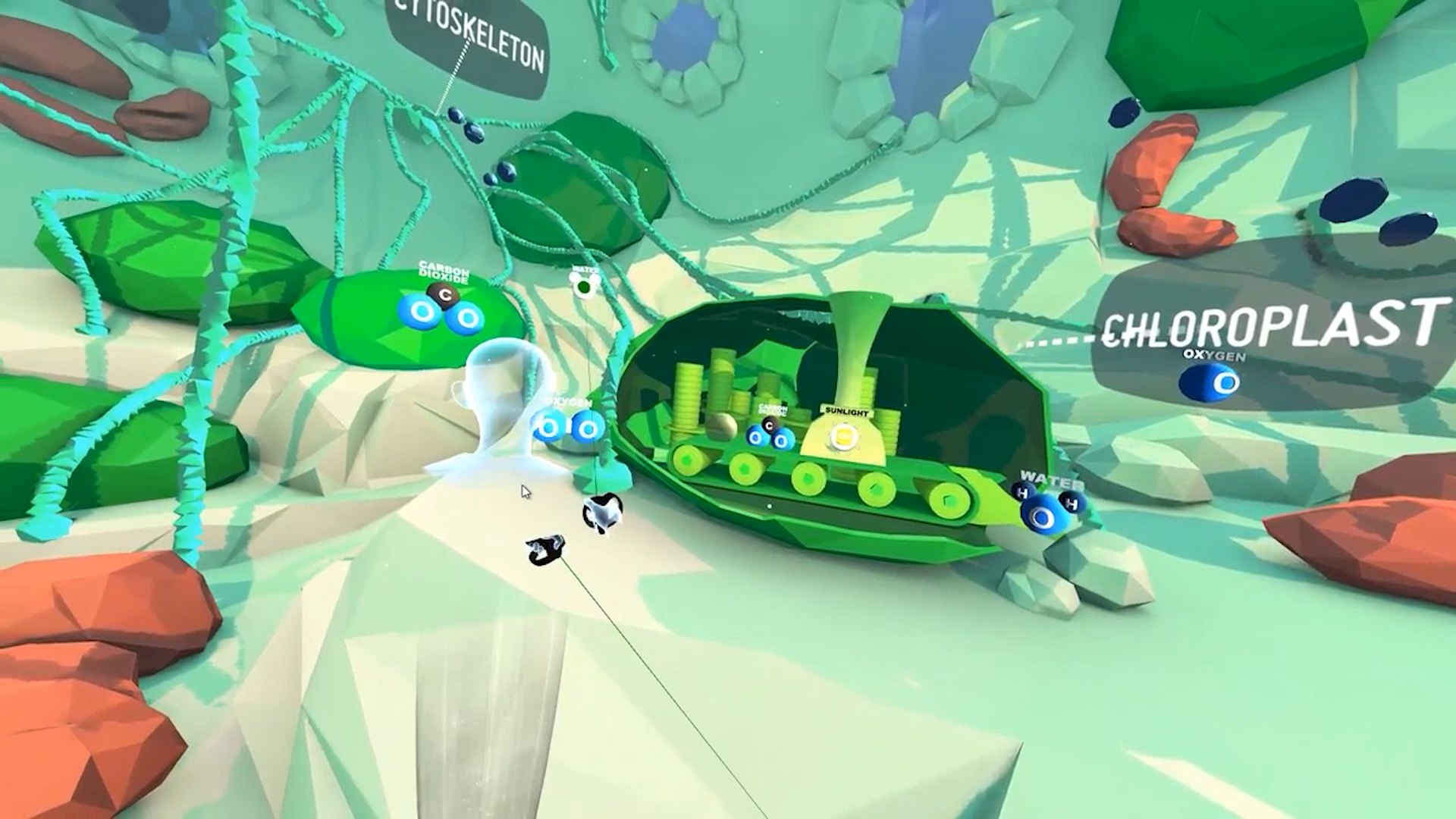
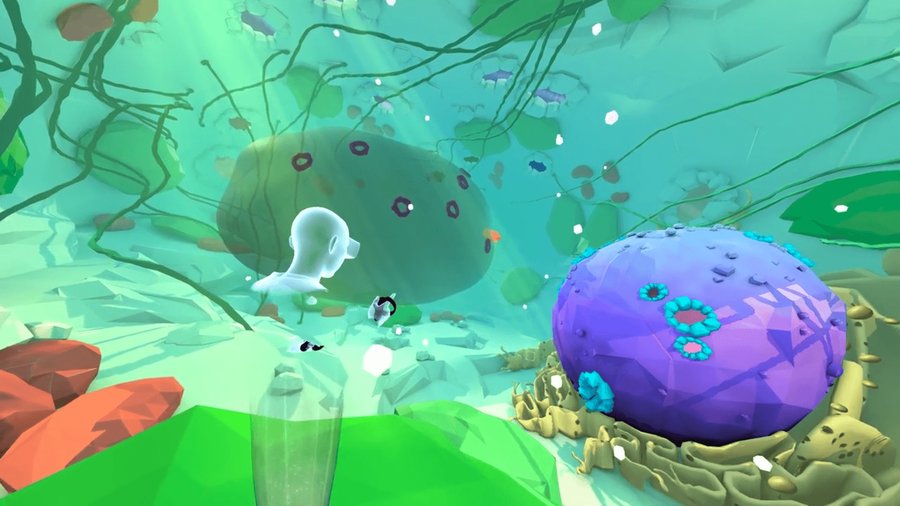
An educational VR app that puts you inside a plant cell with jobs to do: firing salt into the vacuole so the plant survives, hunting for DNA, clearing out damaged protein. It launched for National Science Week in Australia and ran on Gear VR, Daydream, Cardboard, Oculus Rift and HTC Vive. By 2018 it had taken audiences in the tens of thousands inside a plant.
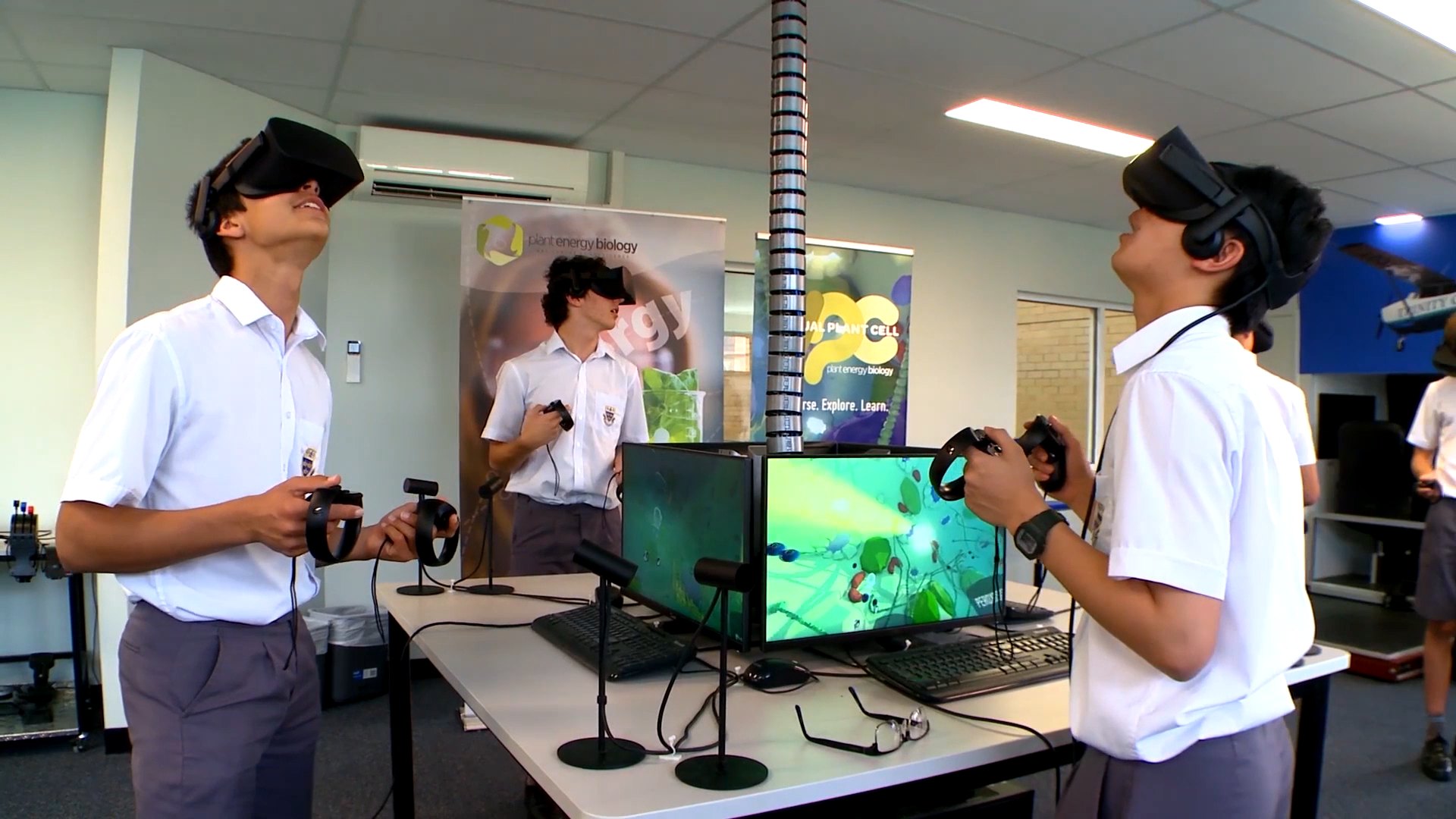
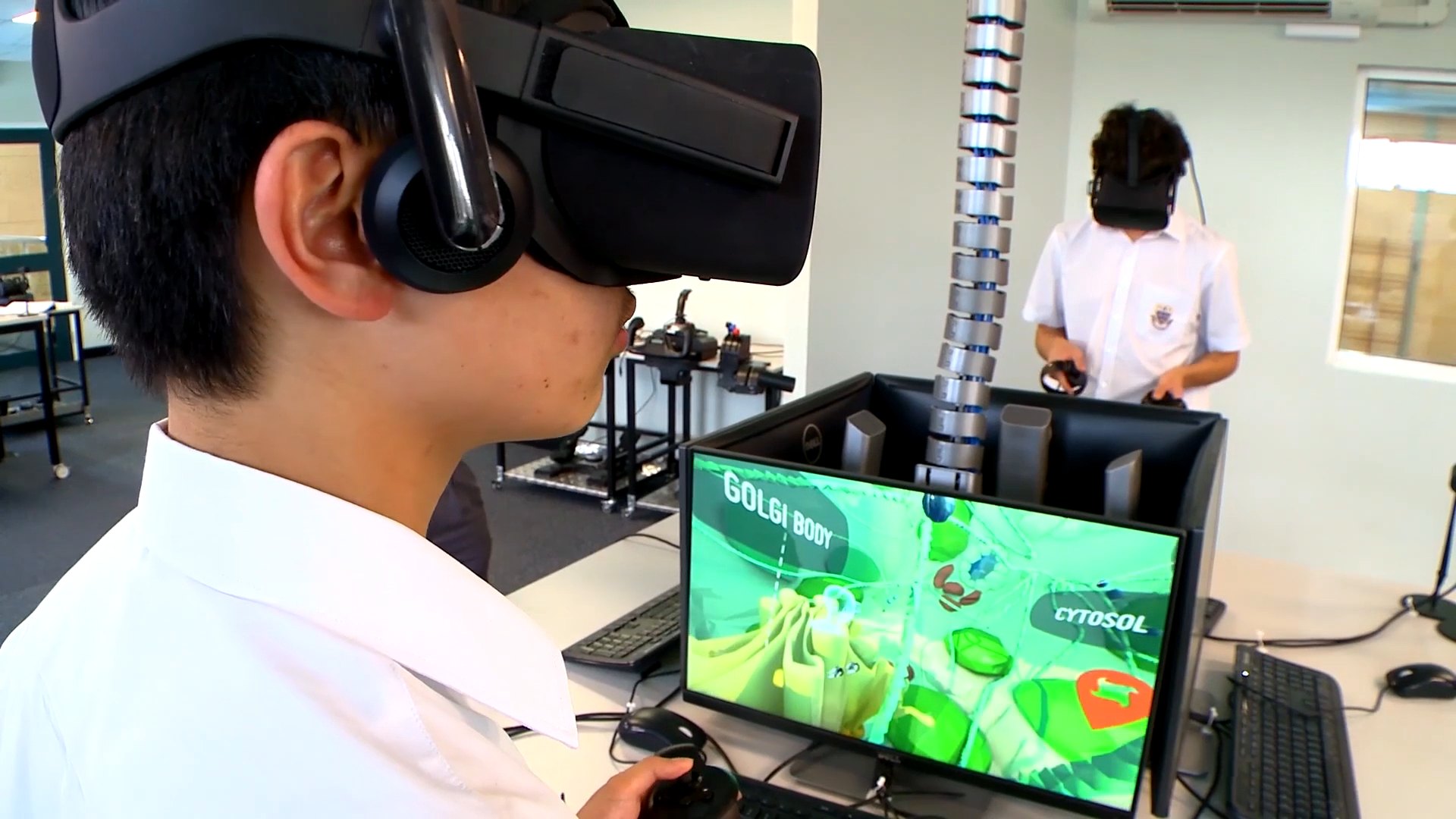
Virtual Plant Cell: Classroom in a school lab.
Its schools version, Virtual Plant Cell: Classroom, is built for two students at a time: one in the headset, the other at a screen with different information, so they have to help each other through it. It was a TIGA finalist for Best Educational Game in 2018, and the suite was a finalist for the Western Australian Premier’s Science Awards. The PC VR version is still on the Meta store. More on Virtual Plant Cell.
Jurassic World VR Expedition: a location-based VR ride
For: The Virtual Reality Company, Universal and Dave & Buster’s, 2018. Built in Unreal Engine for HTC Vive.

A four-seat motion-platform VR ride set between the Jurassic World films, with riders as park rangers sent in to find the dinosaurs. We helped The Virtual Reality Company engineer it, and built a custom ride-operator app so it could also run on other motion platforms, such as MediaMation 4D. It went into about 130 Dave & Buster’s venues in the US, which Variety reported as the biggest game launch in the chain’s history, and won UploadVR’s Best Location Based Experience award in 2018. More on Jurassic World VR Expedition.
Ant-Man and the Wasp: Quantumania: VR set scouting
For: Happy Mushroom (now Narwhal Studios), for Marvel Studios, 2021. Built in Unreal Engine.
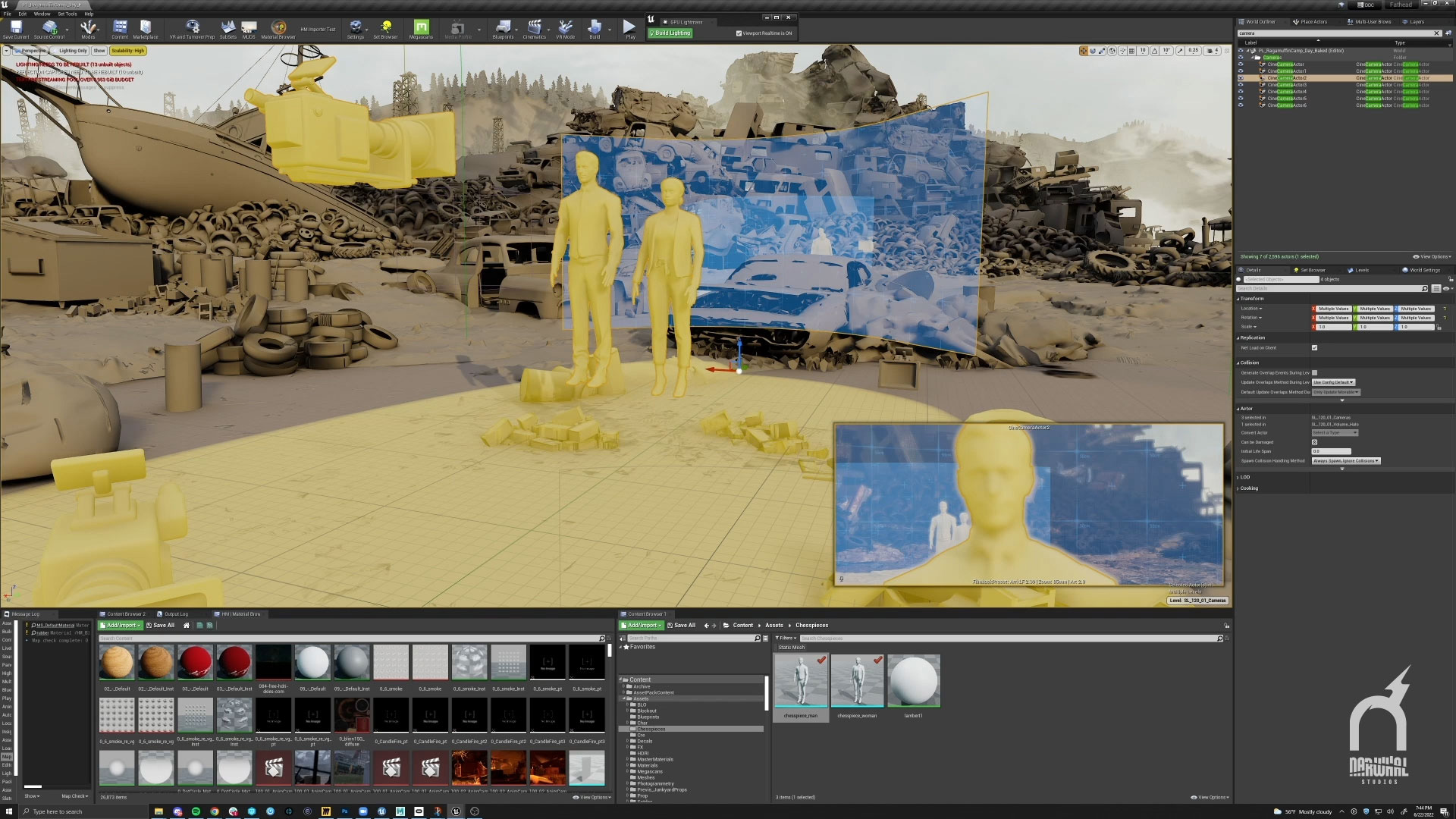
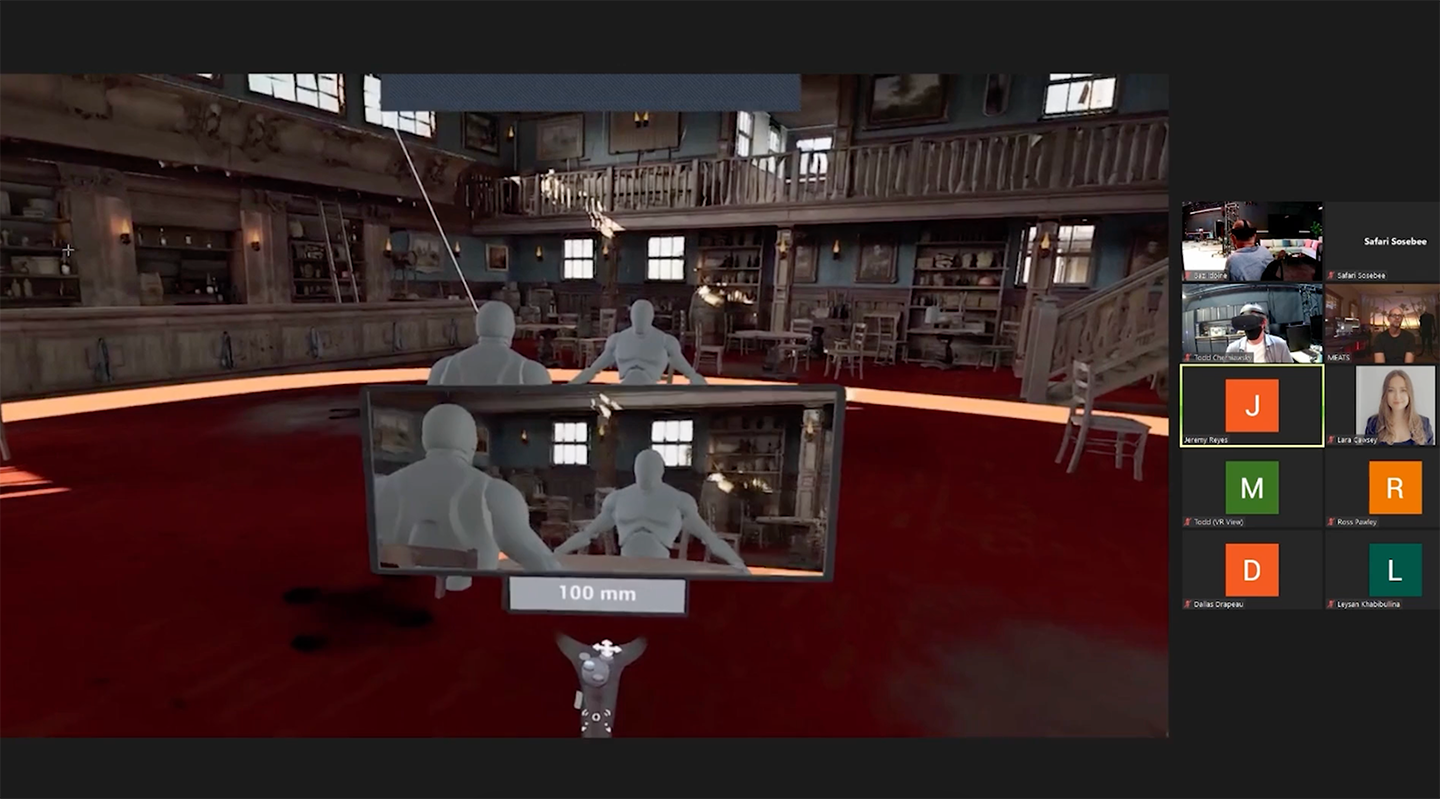
The scouting process in Unreal Engine. Image courtesy of Narwhal Studios; not from this production.
Our founder, Richard England, ran the pipeline behind the film’s VR set scouts in the virtual art department, during the COVID lockdowns: custom Unreal Engine plugins, Perforce version control, and the multi-user sessions that let the director and key creatives walk the quantum realm sets together from Hawaii, Los Angeles and London. Every camera, note and lighting change was captured and handed straight to Industrial Light & Magic for the StageCraft LED volume. He’s credited in the film’s art department. More on virtual scouting for Ant-Man.
“Their prototype, Escape the Dark, demonstrated how immersive, audio-led experiences and inclusive design can open up interactive storytelling to sighted, blind and partially sighted audiences… Richard and the team were incredibly knowledgeable, clearly top of their field, and went above and beyond to collaborate with us and make sure we were included every step of the way.”
— Leon Bennett, Research & Innovation, Sky, on The Rising: Escape the Dark
More of our immersive, VR and AR work
- HSBC accessibility training – a VR app for Meta Quest that helps staff understand how blind and partially sighted people experience the world, designed with a panel of blind and partially sighted people. It won two Digital Impact Awards and a Lovie.
- The Rising: Escape the Dark (Sky, with XR Stories) – an immersive interactive drama for Sky Live, built from the series’ own virtual production assets and designed from the start to include blind, partially sighted, deaf and hard-of-hearing players.
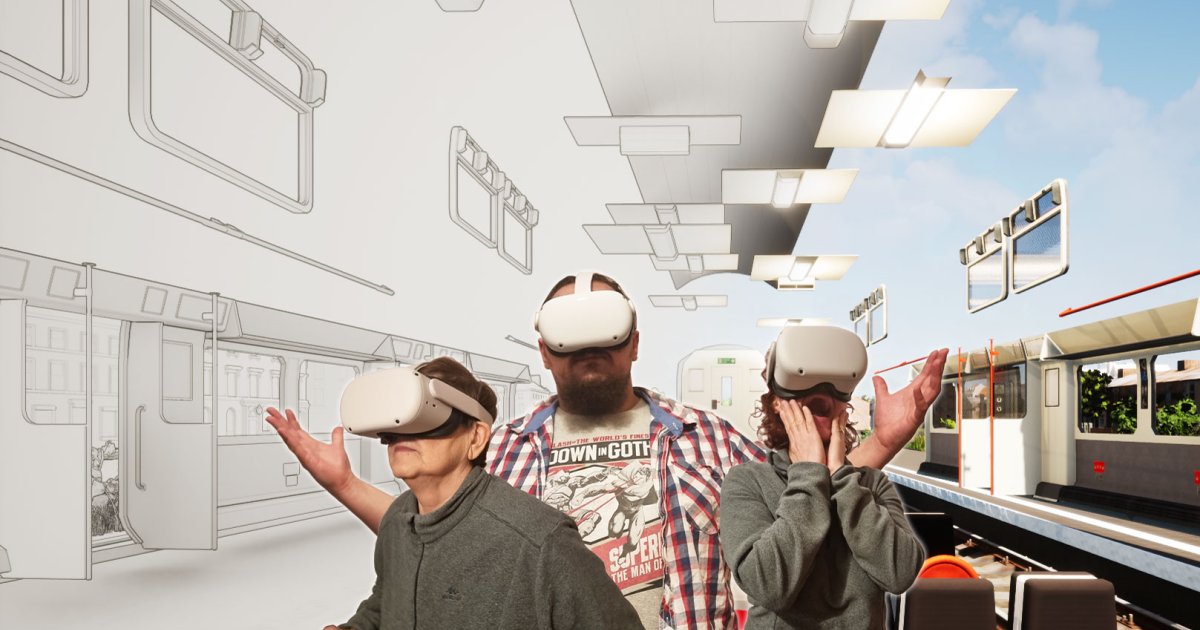
- ExploreStation (Network Rail and the Design Council, 2022) – multi-user VR of a future train station, entered from real train seats. 630 people tried it on its UK tour, and its evaluation found it reached a younger, more diverse audience than consultation usually does.
- Interactive public consultation (Surrey, Wirral, Cornwall and Bolsover councils, with Digital Urban, 2022) – jet packs, a pedalo, an open-top bus and a hot-air balloon through plans for real towns. In Farnham, Digital Urban reports that under-35 engagement rose from 6% to 45%.
- Hockney AR (David Hockney and his studio, 2021) – a free iPhone, iPad and Android app that brings the paintings in The Arrival of Spring catalogue to life, replayed stroke by stroke as he made them.
- Born in Bradford VR (University of Leeds, with artists Dave Lynch and Christopher De Bezenac) – one of the world’s largest health studies, 13,500 children, each one a point in space you can walk among.
- Microbial Puppet Masters (University of Salford, 2022) – a VR journey into the lungs, shown at the Royal Society Summer Science Exhibition.
- Riptide: Intermission (The Riptide, Leeds, 2023) – an 80-minute mixed-reality meditation on HTC Vive XR Elite, shaped by each person’s own onboarding interview.
- Reebok Vortex (Intermarketing, for Reebok) – a beat-driven VR game for the Aztrek relaunch.
- VR Cycling (2014) – a real, pedal-powered bike in VR for road-safety learning, on an early Oculus Rift.
- REK – we help build REK Sim and the VR piloting behind REK’s live fights, where human pilots drive six-foot humanoid robots in the ring, in VR or on a gamepad.
- A multi-user 4D VR player for a luxury immersive-experience company – it keeps wind from fans, scent, haptics and spatial audio in step with the film for every seat, from two-person pods to a 20-seat VR cinema in a London department store, with experiences made for global luxury and beauty brands.
What we build
- Location-based and multisensory VR – rides, cinemas, installations and pop-ups that run all day in a real venue, with the operator software and physical rigs to match, from motion platforms to wind, scent and haptics in sync with the film.
- VR training – for staff who need to understand a situation from the inside, not just read about it.
- VR for learning and science – making something hard to see, like a cell, a lung or a big dataset, into a place people can walk around.
- Multi-user VR – several people, and sometimes a live guide, sharing one scene in the same room or across continents.
- AR apps for phones and tablets – reliable image recognition that works on a printed page or a painting on a wall, without a network or a QR code.
- Mixed reality – experiences that start in the real room and move into a virtual one.
- Virtual production tools – VR scouting pipelines and Unreal Engine plugins for film and TV.
- Keeping it running – performance tuning for headsets, and support after launch for apps that have to keep working.
When VR isn’t the answer
A headset is the right choice when being inside something changes how people understand it: standing in a cell, walking a station before it’s built, scouting a set that doesn’t exist yet. It’s the wrong choice when people only need to see something once, when they can’t or won’t put a headset on, or when you need thousands of people to reach it from home. In those cases we’ll suggest a screen, a tablet or a web app instead. On our council consultations, most of the experiences also ran on a screen with an Xbox controller, so nobody had to wear a headset to take part.
Questions people ask
What does a VR development company actually do?
It designs and builds the software people use in a headset, or through a phone or tablet for augmented reality: the 3D scenes, the interaction, the performance work that keeps it smooth, and everything around it, from multi-user servers to the data it collects. For us that has also meant motion platforms, real bikes and pedalos, train seats and ride-operator software, because VR often has to work with something physical in a real venue.
How much does it cost to develop a VR or AR app?
It depends on the project, so we price each one against its scope rather than from a rate card. The things that drive cost most are how much 3D content has to be made, whether several people share one scene, which headsets or devices it has to run on, whether it connects to physical hardware, and how long it has to keep running after launch. Tell us what you need and we’ll say what it would take.
Can you build VR training for employees?
Yes, where experiencing something helps more than reading about it. For HSBC we built an accessibility training app for Meta Quest that puts staff in the shoes of blind and partially sighted people, designed with a panel of blind and partially sighted people who act as guides inside it. We also build tools that non-technical people have to pick up quickly: on Ant-Man and the Wasp: Quantumania we trained the director of photography and other key creatives to use the VR scouting tools. If you’re an employer weighing up VR training, we’ll also tell you honestly if a screen, a tablet or the browser would do the job with less hassle.
Unity or Unreal Engine?
We work in both and choose per project. Virtual Plant Cell was built in Unity, which suits lighter, cross-platform and mobile work. Jurassic World VR Expedition, the Ant-Man scouting pipeline, ExploreStation and the council consultations were built in Unreal Engine, which suits large, detailed scenes and multi-user sessions.
Which headsets and devices do you build for?
Whatever the project needs. We’ve shipped on Meta Quest, HTC Vive and Vive XR Elite, Oculus Rift, Gear VR, Daydream and Cardboard, and built AR for iPhone, iPad and Android. In early R&D for REK we also piloted humanoid robots through an Apple Vision Pro.
Do you work outside Leeds?
Yes. We’re based in Leeds and work with clients across the UK and abroad. Virtual Plant Cell was built for an Australian research centre, Jurassic World VR Expedition ran in arcades across the US, and the Ant-Man scouting sessions linked people in Hawaii, Los Angeles and London.
What’s the difference between VR, AR and mixed reality?
Virtual reality replaces what you see with a computer-made world, usually through a headset. Augmented reality adds digital things to the real world, usually through a phone or tablet camera, as Hockney AR does with the pages of a catalogue. Mixed reality sits between the two: a headset that shows the room around you and blends virtual objects into it, as in Riptide: Intermission, which eased people from the real room into a virtual one.
Got a VR or AR project in mind?
Tell us what it’s for and who it’s for. If VR or AR isn’t the best way to do it, we’ll tell you that too.
Since 2011
We’ve been making interactive work since 2011, from Kinect walls and projections in museums and libraries onwards, and working as virtual reality and augmented reality developers since the first Oculus Rift development kit. The thread running through it is the question clients bring us: can it even be done? Often the answer involves VR or AR. Sometimes it involves a robot. See the rest of our projects, or get in touch.