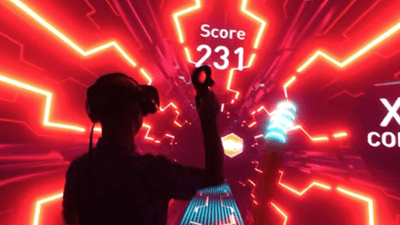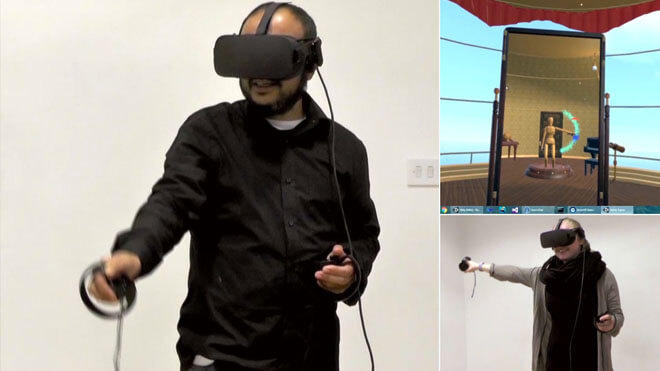
REK2, San Francisco, August 2026, then the same fights in REK Sim. Video: REK.
REK – Yes, it’s real! Humanoid Robot Sports and Sim
REK is a live sport: a humanoid robot fighting league (think Robot Wars on legs), where real robots fight each other in a ring, each one controlled by a human pilot. The robots don’t think for themselves: the pilot decides every move, and the only AI on board is the balance system that keeps them standing, a bit like a self-balancing scooter keeps you upright while you choose where to go.
There have been a few live REK robot fighting events so far, with more on the way, and the fights, tickets and dates are all on REK’s own site.
Want to pilot a real robot? Start in the sim.
REK Sim is free, and the robots in it move the way the real ones do – the same trained balance holding them upright, the same controls the pilots use ringside. No move is pre-recorded: every punch, block and stumble comes out of the physics, exactly as in the ring.
Get good enough and that is the route in. The first championship's winners flew to San Francisco and piloted the real robots at REK2.
Get it onSteam
Get it onMeta Quest
Beta on TestFlightiPhone & iPad
 More about the simrek.com/sim
Free, cross-platform and in early alpha: PC, Mac and Steam Deck, or in VR on Quest – and they play each other. There's now a beta for iPhone and iPad too, testing new touch controls, on TestFlight. REK Sim is built by the global REK team; we're one part of it, contributing to the client, the pilot controls, the match servers and the championship ladder. It's REK's game, and everything about it is at rek.com/sim.
Looking for REK itself – the fights, the tickets, the events? That's rek.com.
Events: REK0 (San Francisco, September 2025 – around 3,000 people, and a queue round the block to see a gamer, Twitch co-founder Justin Kan, beat UFC fighter Amil Hyder), REK America (USA tour), REK1 (San Francisco, February 2026), REK Tokyo (July 2026), REK2 (San Francisco, August 2026)
Apps and R&D: REK Sim (the multiplayer simulator, on Steam and Meta Quest, in beta on iPhone and iPad), REK Fighter (the pilot's VR app), REK Spectator (R&D around the audience view)
In short
REK lets people control real humanoid robots - piloting them live, at events, in front of a crowd. The challenge is making that feel immediate and legible to both the pilot and the audience, while keeping the system safe and reliable enough to run in front of a crowd.
The control system runs in two places: the robots themselves, and a multiplayer simulator anyone can download. The first sim championship weekend drew 3,670 matches from players around the world, and its winners earned a trip to San Francisco to pilot the real robots at REK2 in August 2026.
We were there at the very beginning of REK, and today work with the wider team on the software and systems side, helping turn experimental robotics into a reliable live experience: VR and gamepad piloting, mixed reality interfaces, AI-augmented spectator cams, end-to-end latency reduction, event-ready tooling, and the simulator that trains the pilots.
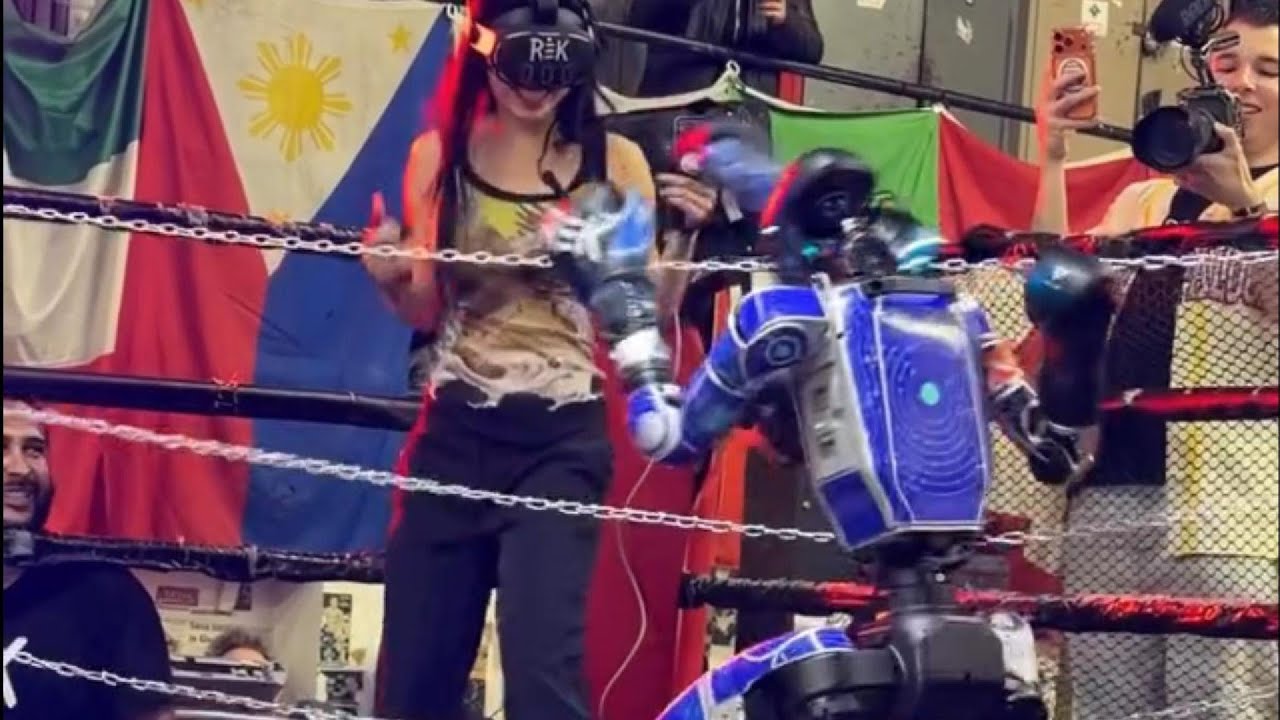
Pilot in VR, robot in the ring. The core REK setup - a person in a headset ringside, their movements translated into robot motion in real time.
Why robot fighting matters
Fights are unpredictable. Robots get knocked off balance, hit the floor and have to get up again, in front of a crowd and cameras, with a pilot steering them from outside the ring. Getting that to work reliably is a really hard engineering problem, and it’s one humanoid robots have to solve before anyone will trust them in a warehouse, or on a site that isn’t safe for people.
At a recent REK event, the eventual winner’s robot went down mid-fight. He got it back on its feet with a recovery move he’d practised in the sim, and went on to win. What works in the sim gets tested for real in the ring, and what we learn there goes back into the robots and the controls.
What is REK?
It's real: real robots, real pilots, real crowds. REK pilots control humanoid robots at live events in real time - in VR or on a gamepad. The robots are not autonomous: the only AI involved is the trained balance system keeping them upright while a person drives. The format opens up an interesting question: what does it feel like to drive a robot body as if it were your own, and how do you make that experience both controllable and watchable?
It has grown quickly: REK0 in San Francisco in 2025, a tour across the USA, the tournament-scale REK1 in February 2026, then REK Tokyo, and REK2 back in San Francisco in August 2026 - America's first fights on the full-height, six-foot humanoid robots.
Questions people ask
Is REK real?
Yes. Real six-foot humanoid robots, real human pilots, real crowds – REK0, REK1, REK Tokyo and REK2 so far, with the fights, tickets and events at rek.com. The simulator is real too: it's what the pilots train in, and anyone can download it.
How are the robots controlled?
By a person, live, from ringside. There are two ways to pilot: in VR, where a Meta Quest headset and controllers turn the pilot's own movements into the robot's (in early R&D we also piloted them through an Apple Vision Pro); or on a plain gamepad. VR is the one you see on the big screen, but it's one control method, not the only one – and increasingly the events run on gamepads too, simply because far more people can practise on one. The robots aren't autonomous: the only AI on board is the trained balance that keeps them upright while the pilot drives.
Do the robots think for themselves?
No. Every punch, step and block comes from the pilot. The only AI on board is the trained balance that keeps the robots standing, so they don’t fall over while the pilot drives. Deciding what to do, and when, is always down to a person.
Do I need a VR headset?
No. The sim runs flatscreen on Steam (PC, Mac and Steam Deck) with a gamepad or keyboard, and in VR on Meta Quest, with cross-platform matches between them. The controls are the same ones used ringside, whichever you pick.
Can anyone pilot a real robot?
That's the point of the sim. At REK1 anyone with a ticket could apply to pilot; the first sim championship's winners flew to San Francisco to pilot the real robots at REK2. The route in is the championship ladder in the sim.
What is REK Sim, and what does it cost?
Free. It's the multiplayer simulator, built by the REK team: a digital twin of the live show, with the same trained balance as the real robots, the same pilot controls and REK's San Francisco shop as the arena. A practice arena covers the basics; a championship arena handles matchmaking, scoring and the global ladder. It's in early alpha, on Steam and Meta Quest.
Is the sim the same as the real thing?
Closer than you would expect. The sim runs the same trained balance that keeps the real robots on their feet, so the robot you drive stumbles, recovers and falls the way the real one does. No move is pre-recorded – every punch, block and stumble comes out of the physics – and every match runs on a dedicated server holding one authoritative simulation, so a Quest headset and a PC fight the same fight on equal terms. Winning in the sim has already put people in the ring with the real robots, and it showed at REK2: the winner, Hiroyuki Osone, who had qualified by playing from home in Japan, had his robot fall, got it back on its feet with the same tricky get-up combination he had learned in the sim before the count of ten, and went on to win.
In the news
- REK: The Robot Combat League Bringing VR-Piloted Humanoid Fighting to the Real World FightBook MMA, August 2026
Every punch, block and movement is controlled by a human—but the battle takes place between physical robots.
- A short visit with a lot of fun at REK The Ghost Howls, June 2026
The idea is that the robots don’t fight automatically, but there are people inside VR headsets moving them.
- Robot fighting league has a new home in San Francisco where you can watch — and buy — ‘humanoids’ San Francisco Chronicle, April 2026
The challenge, and our part in it
Getting a humanoid robot to move is one problem. Making that movement feel immediate and legible - to the pilot wearing a headset and to the audience watching - is a much harder one. Add a live show environment and it gets harder again: piloting has to be intuitive under pressure, response times short and predictable, sessions stable and repeatable, and the whole thing safe around large humanoids moving fast.
At the very start, it was just us. The first robot experiments - teleoperating an H1 - were Reflex Arc and REK’s founder, Cix Liv, with us working remotely from the UK. Since then REK has grown into a global team across the US, Portugal, India and here in the UK, and the work - the sim especially - is a shared effort that isn’t ours alone. Our focus has been bridging real-time / game-engine approaches with live production reliability and robotics constraints, including networking, UX, telemetry, and tool-building. It’s one strand of our wider AI work.
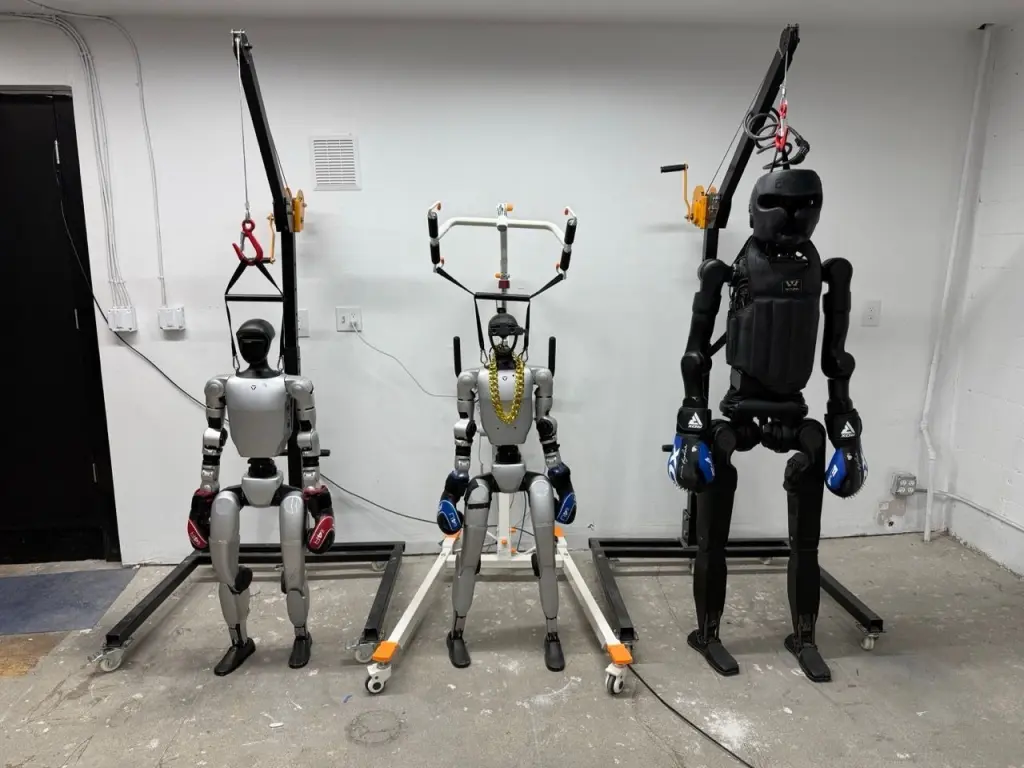
Hardware iteration and show prep: the practical realities of building something that has to run reliably in front of a crowd.
Our part
Across R&D and live events, the work has centred on making that faster and more reliable - a pilot experience that's readable and responsive, while keeping the overall system robust for show conditions.
- VR piloting and mixed reality app - for triggering, managing, and monitoring actions
- Latency reduction - optimisation across the pipeline to tighten response time from pilot intent to robot motion
- Hybrid control approach - the pilot chooses every move, and the robot's trained motion carries it out cleanly; the team are working on this for balance and punch quality
- Event tooling - spectator views, calibration workflows, and operational support for live shows
- Multiplayer simulator - contributing to the client, networking, and pilot controls, as part of the wider REK team
- Game server and backend - contributing to the match servers that stream the physics to every player, matchmaking, scoring, and the championship ladder, plus a full admin back office for managing players, servers and championships
From experiments to live events
Early work explored a range of teleoperation techniques and prototypes, quickly surfacing the real constraints: safety, balance, reliability, and the importance of a readable “motion language” for an audience. REK0 was the key proof point: two robots, live crowd, VR pilots, and an entertaining audience experience. It also produced a clear improvement list for the next milestone.
REK1 scaled it up - a tournament at the historic Kezar Pavilion, San Francisco, the night before the Super Bowl, where anyone with a ticket could apply to pilot a robot. Bigger crowd, wider pilot intake, higher production value. For us it was the next round of iteration: tightening responsiveness, improving the pilot experience, and making the system more robust under show conditions. REK Tokyo followed, taking the format overseas - and well enough received that one robot escaped the cage.
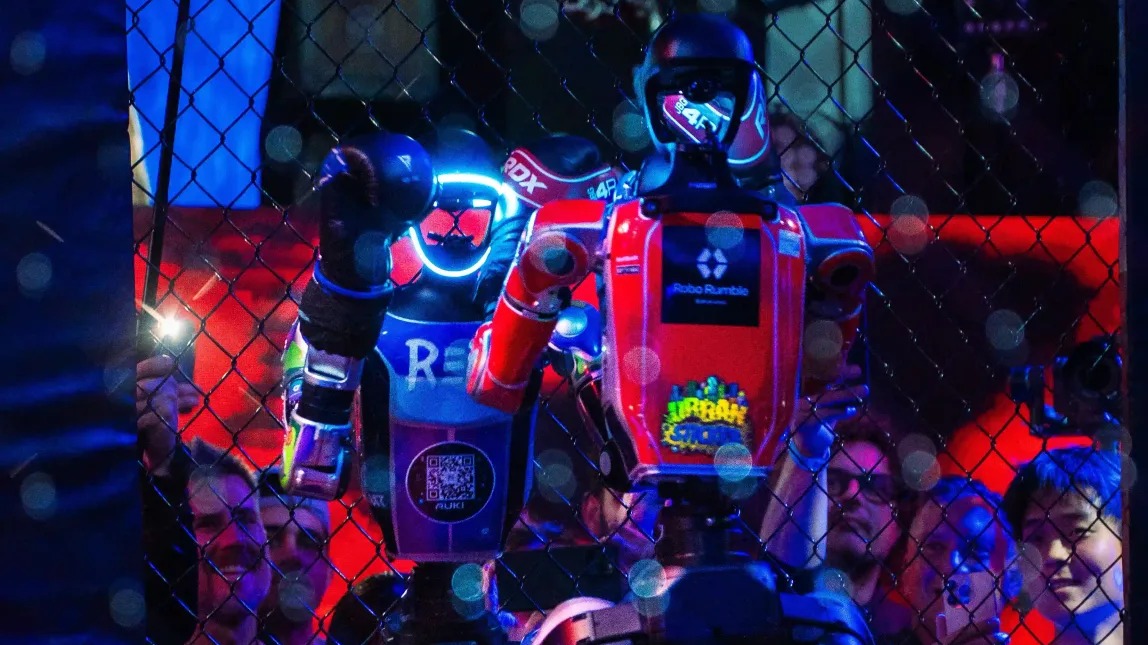
Ringside at a REK event - sponsor decals, gloves, and a crowd right up against the cage.
The multiplayer simulator
The simulator is now out in alpha. It’s a digital twin of the live show: the same trained balance that runs on the robots themselves, the same pilot controls, and REK’s San Francisco shop recreated as the arena. Anyone can train as a pilot from anywhere in the world - flatscreen or VR, keyboard or controller.
Same controls, real and virtual: a robot driven from a handheld controller in REK’s workshop (top), and the sim on a Steam Deck (bottom). Video: Cix Liv / REK.
REK Sim in action: the arena is REK’s San Francisco shop, and every move comes out of the physics. Video: REK.
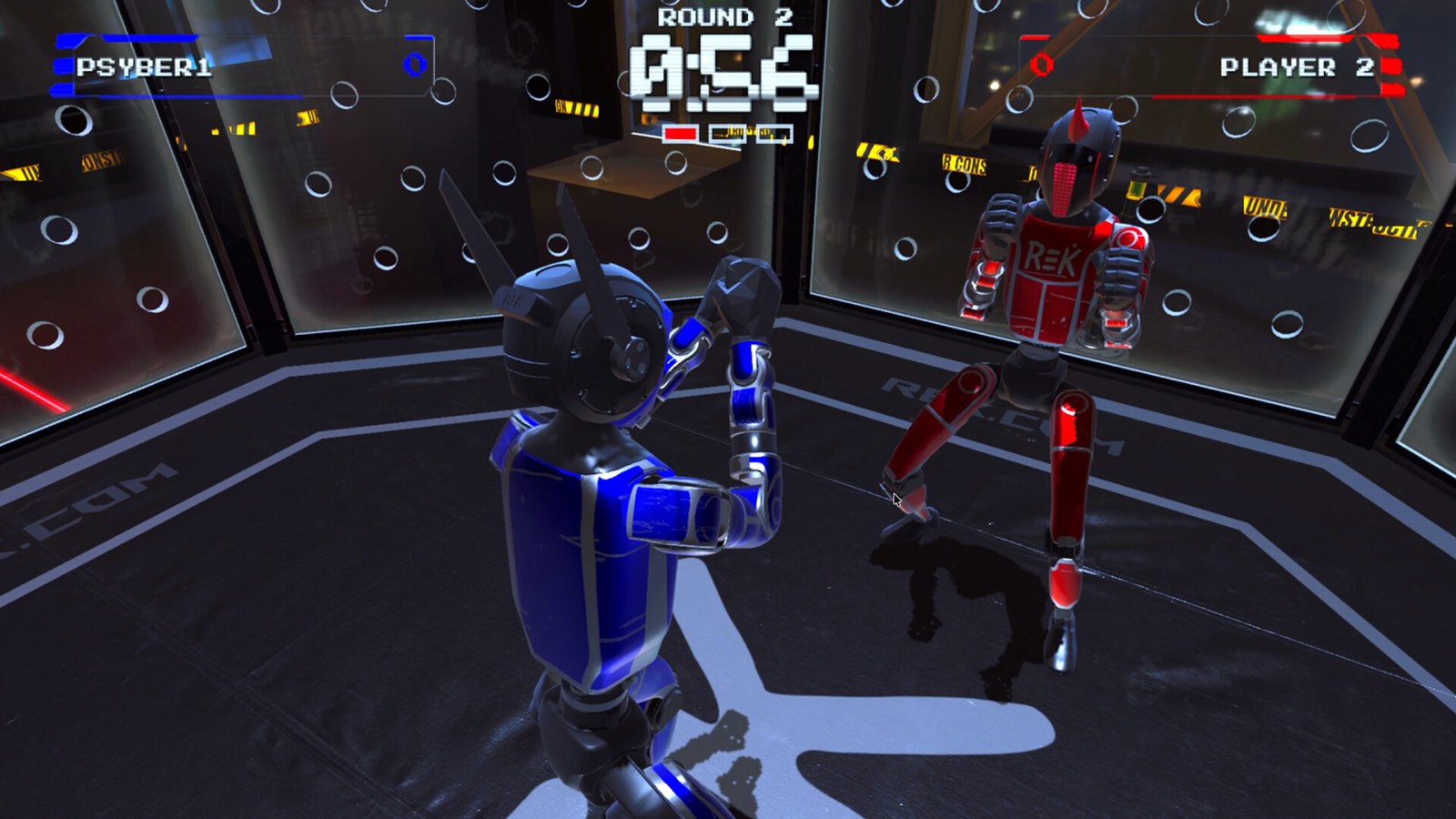
Online PvP in the sim. No pre-recorded animation - every punch, block, and stumble comes out of the physics and the robot’s own balance.
It runs on Steam (PC, Mac, Steam Deck) and on Meta Quest headsets, with cross-platform multiplayer between them. A practice arena covers the basics; a live championship arena handles matchmaking, scoring, and the leaderboard.
Fair fights: the server owns the physics
Much of our contribution to the sim is behind the scenes. Every match is run by a dedicated game server holding the single authoritative simulation, so both pilots are really fighting the same fight - nobody gains an advantage from a faster machine or a better connection, and a Quest headset can face a PC on equal terms. Around it sits the backend that makes a championship possible: matchmaking and queueing, scoring, match records, and the global ladder.
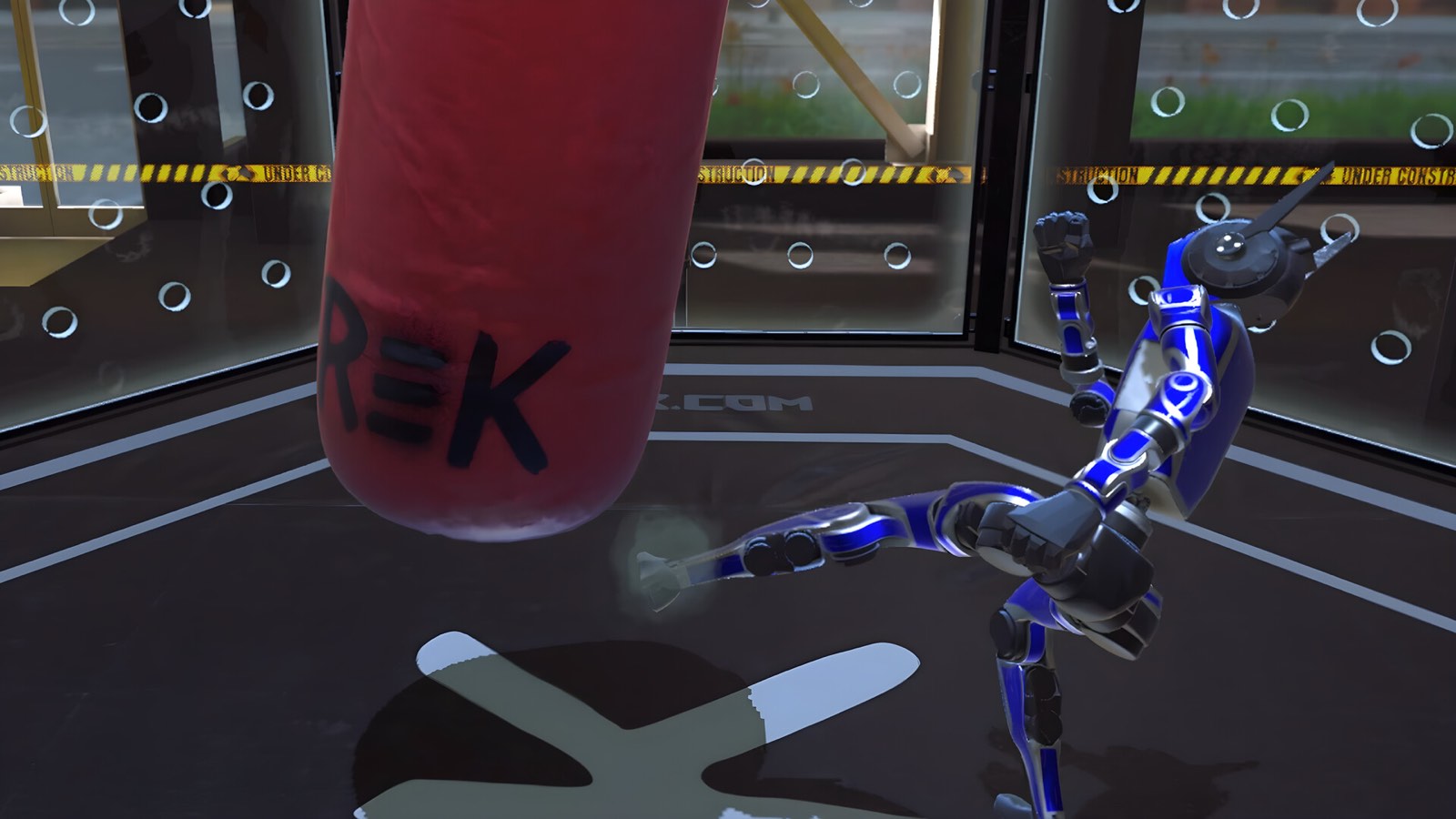
The practice arena - a recreation of REK’s San Francisco shop, where pilots get to grips with weight, momentum, and balance.
Inside the system
A short technical aside, for anyone who wants to know what is actually running:
Building the robotic "reflex arc"
In biology, a reflex arc is the fastest neural pathway - stimulus to response with minimal delay. That's what the REK team is building: the shortest possible loop between pilot intent and robot action.
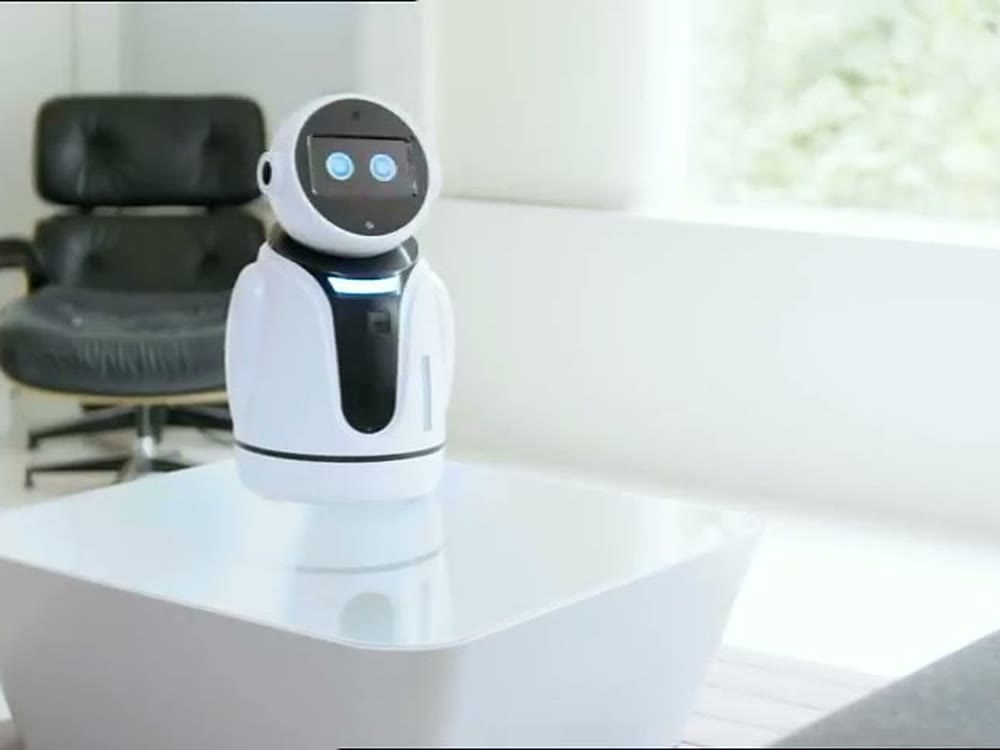
It's a loop we first built at a much smaller scale: the emotive face for Jess, the robot in Channel 4's The Robot Will See You Now (2017).
- A full physics simulation - no scripted animation, no motion capture. Every punch, stumble and knockdown is worked out joint by joint, and the robots hold themselves up with the same trained balance that runs on the real ones.
- A real robot content pipeline - source rig data goes through an end-to-end pipeline to become a playable fighter, which is how the sim was able to stand up an entirely new, taller robot body for REK2.
- Global, fair matchmaking - server placement and matchmaking span multiple regions, so a pilot on a Quest in Tokyo and one on a PC in London end up fighting the same fight.
- Ladder integrity - tooling that watches for exploited or thrown matches, so championship results mean something.
Championship weekends
The sim opened for a first public beta weekend with nearly 800 matches played. The first REK Arena Championship followed: 3,670 matches over a weekend, players all over the world, and a two-point gap at the top. Tactics emerged quickly - people found their own ways to score and counter.
The sim is a direct bridge to the live show, and a way to stress-test control approaches and gather data at scale before anything touches hardware. That bridge was crossed a month later: the championship's winners piloted the real robots at REK2.
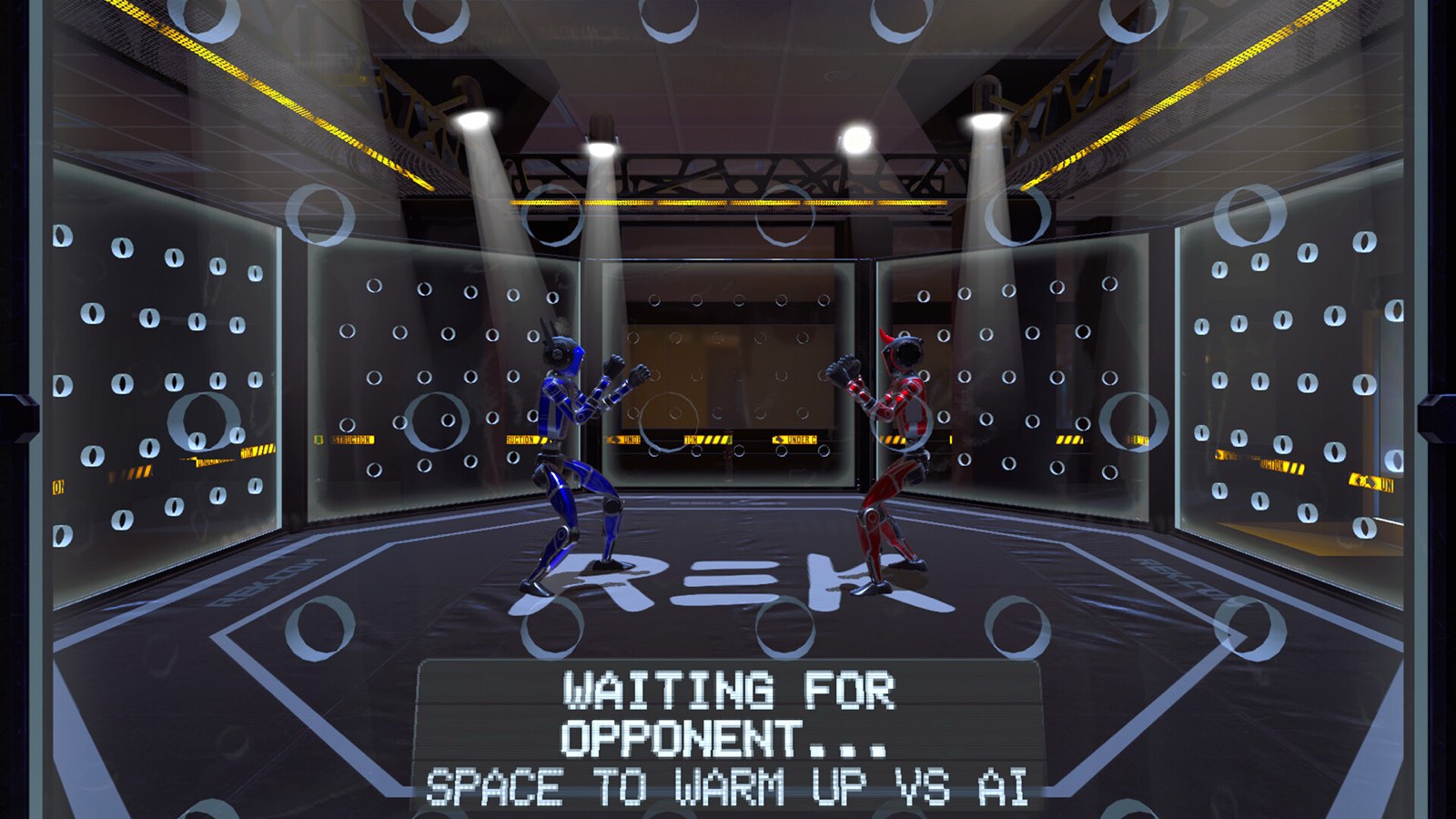
The championship arena, waiting for an opponent. Rounds are on the clock, every clean hit scores, and ties go to sudden death.
REK2: the team together, and the sim's winners in the ring
REK2 ran in San Francisco on August 15, 2026 - America's first fights on the new full-height humanoid robots, six feet tall. It was also the first time the whole team, spread across the US, Portugal, India and the UK, was in the same room together.
The winners of the sim's first championship were flown out to pilot the real robots on the night, alongside REK's regular roster of pilots. The event was super competitive, and the sim did its job. Japanese pilot Hiroyuki Osone took the overall title, backing up his win at REK Tokyo the month before.
Play the sim
Online PvP, physics-based robot control, and cross-platform multiplayer. It now includes the taller six-foot robots alongside the originals - same moves, same physics sim, same competition rules as the live events. This is early alpha and built in public - expect rough edges, expect it to change.
Free on Steam and Meta Quest, with an iPhone and iPad beta on TestFlight - links at the bottom of this page.
Talk: BEYOND Conference
Watch: REK0 (full event recording)
Full recording of REK0.
Want to jump straight in? Open at beginning of event on YouTube.
VR180 on Apple Vision Pro
REK0 is also available to watch in VR180 on Apple Vision Pro via Vantage VR. Watching in immersive video makes the crowd scale and ring depth come across far better than a flat stream - you'll feel like you were there - and you can clearly see the VR pilots controlling the robots.
Get the sim
Free, cross-platform, and still in early alpha. Pick your platform, or come and say hello on Discord.
- Steam - PC, Mac, and Steam Deck
- Meta Quest - public alpha
- TestFlight - iPhone and iPad beta, testing new touch controls
- Discord - the REK community
- REK Sim - more about the simulator
Got questions?
Say hi below. If it is about the fights, tickets or the events, REK are the people to ask – rek.com. If it is about the sim, start at rek.com/sim. Anything else, ask here and we will answer it or point you to the right people.