AI with a body. And a purpose.
Tools that analyse and automate. Systems that understand movement. Characters you can talk to. Software that holds up in the physical world.
Reflex Arc is a UK software studio in Leeds. AI is one of the tools we use, where it has a purpose, and a person always makes the final call. It goes into tools people use every week, experiences people step into and talk to, and software that runs on devices and machines, not just screens.
In short
We've been building machine learning into interactive experiences since 2015. From talking characters and intelligent applications to computer vision, workflow tools and physical AI, we help studios and organisations turn emerging technology into things people can actually use.
Much of our recent work is under NDA, so this page describes it by shape rather than by client: the kinds of systems we build, the technologies involved and some of the engineering problems we solve.
What we build
AI-powered tools and workflow automation
We build practical tools around existing workflows: systems that read documents, organise information, connect services and prepare decisions for a person to review. The aim is to remove repetitive work without hiding what the system has done. That includes analytics: making sense of how people actually use a product or experience, so the next version is better.
A worked example: our own bookkeeping. VATCheck is an internal tool we built for ourselves and use every week. It reads receipts and invoices out of our email and a drop folder, has a language model pull out the supplier, date, amounts and VAT, then matches each one against unexplained bank transactions in our accounts software, attaching the receipt only when the amount, date and supplier all agree above a confidence threshold, and putting everything else in a pile for a person to review. It runs dry by default, nothing is written without an explicit commit, and every action is logged so a wrong match months later can be traced. The extraction can run on a cloud model or on a local one that never leaves the machine: the same choice we offer clients. It turned a quarter's VAT reconciliation from days into an afternoon.
The most useful part is the weekly digest. It lists the action points: everything it has uploaded and assigned, each with a direct link into the accounting system so a person can confirm it, plus what's ready to attach with one command, what's waiting on a supplier's portal, what needs a person's eyes, and any bill whose category or VAT treatment disagrees with that supplier's history.
The same approach applies to client projects: understand the existing process, automate the repetitive parts, integrate with the systems already in use and keep people in control of the decisions that matter.
Vision, media analysis and movement
Our first shipped machine-learning system was the Makaton signing game in 2015, with a recogniser trained on Makaton signs. It was BAFTA-nominated and runner-up at NHK's Japan Prize. Since then, our work with bodies and movement has also used camera-based pose estimation, skeletal tracking and conventional real-time interaction systems: Rehab Trainer turns stroke physiotherapy into games patients want to repeat, and more recently a fitness game ran entirely on a phone (one camera, on-device pose tracking, no headset, the skeleton in the tile on our homepage), which we worked on through its 2024 private beta. Not every part needs machine learning: the point is choosing the right technique for the interaction.
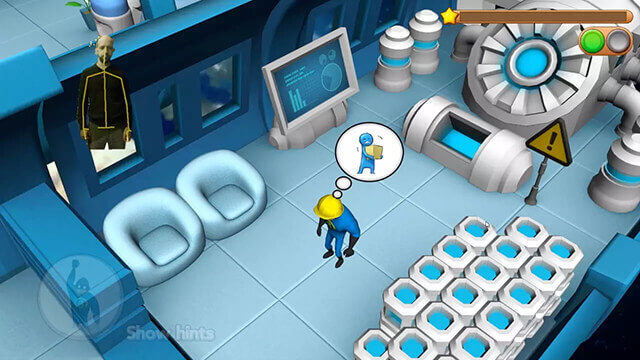
The Makaton signing game (2014–15), played entirely by signing, with a recogniser trained on Makaton signs. Developed with GamelabUK and Hassell Inclusion.
Body tracking and spatial audio also run through our accessibility work. For Sky, The Rising: Escape the Dark used Sky Live's camera-based body tracking in the living room, with spatial audio and visual direction cues, designed so blind, partially sighted, deaf and hard-of-hearing players can play alongside everyone else. Our VR training for HSBC was built accessibility-first too. The accessibility itself comes from interaction design rather than machine learning, though machine learning does specific jobs in both, such as the body tracking on Sky and, on HSBC, a narration voice trained on our audio engineer's own voice.
A more recent strand, and one we describe only in outline: pipelines that run vision and language models over large collections of media and turn what they find into structured results a person can review, query and act on: work that would otherwise be done by hand, one item at a time. Built to run in batches at scale, with the models' output checked against human judgement before anyone trusts it.
Conversational AI
A person speaks; a character listens, thinks and replies in a voice that fits, fast enough that the conversation feels like one. Connecting a language model to a voice API is the easy part. We build the complete experience around it: the real-time application, interaction design, animation, safeguards and system integrations that make the conversation usable: speech recognition, the language model that decides what to say, the guardrails around it, speech synthesis, and the lip-sync, gaze and body language that keep the character in the world rather than floating over it.
We have extensive experience with ElevenLabs for real-time voice, usually combined with a language model from Anthropic (Claude), OpenAI or Google for the conversation itself, chosen per project, not by habit. The difficult parts are latency you don't notice, turn-taking that doesn't talk over people, knowing what the character must never say, and a graceful hand-off to a human when that's the right thing.
The shape of it, from projects we can't name: a voice-led companion built to be talked to in confidence, designed so that sensitive processing stays on the device where that's possible. Assistants that talk visitors through an exhibit. Characters in a headset who remember what you told them ten minutes ago. We've built several of these, all under NDA, and we're happy to talk through how they work on a call.
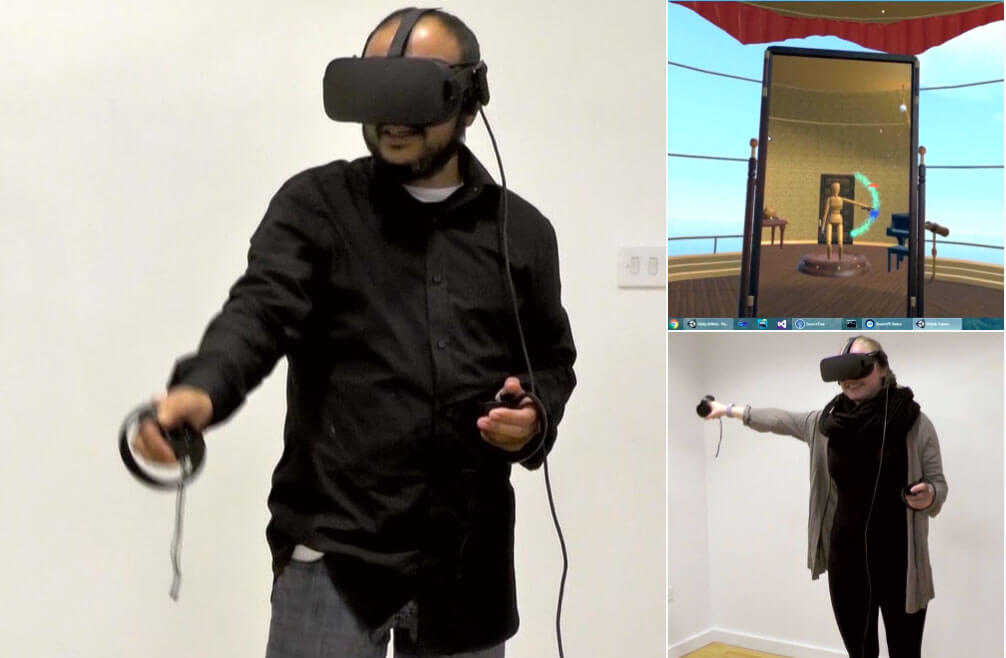
One we can name: for Riptide: Intermission (2023), an 80-minute mixed-reality meditation with XR Stories, each visitor began with an AI-led onboarding interview on Charisma's platform. Charisma built the conversation; we built the VR experience that listened to it, taking what each person had said and shaping how their journey looked and behaved, so no two were the same.
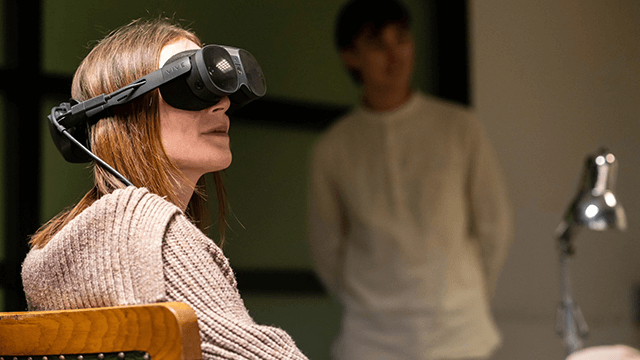
Riptide: Intermission (2023), with XR Stories. Charisma built the AI onboarding conversation; we built the VR experience that responded to it.
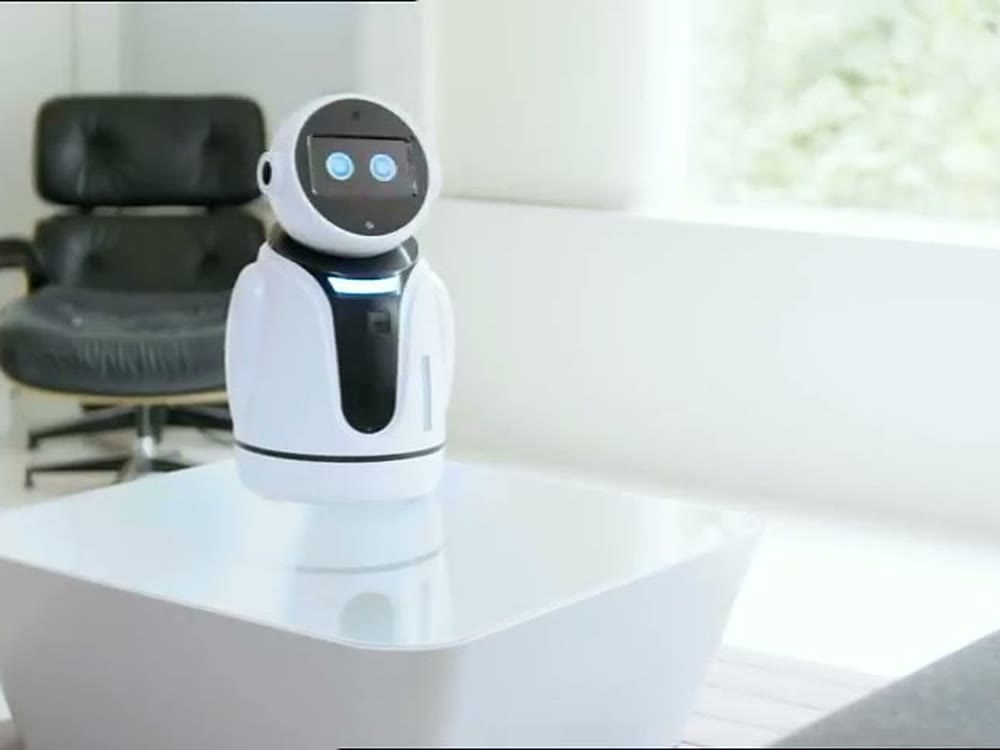
Before all of that: in 2017, for Channel 4's The Robot Will See You Now, we built the emotive face for Jess, a robot that sat in a room with real couples and families: idle, listening, thinking, reacting, on an Android device.
Physical AI: our work with REK
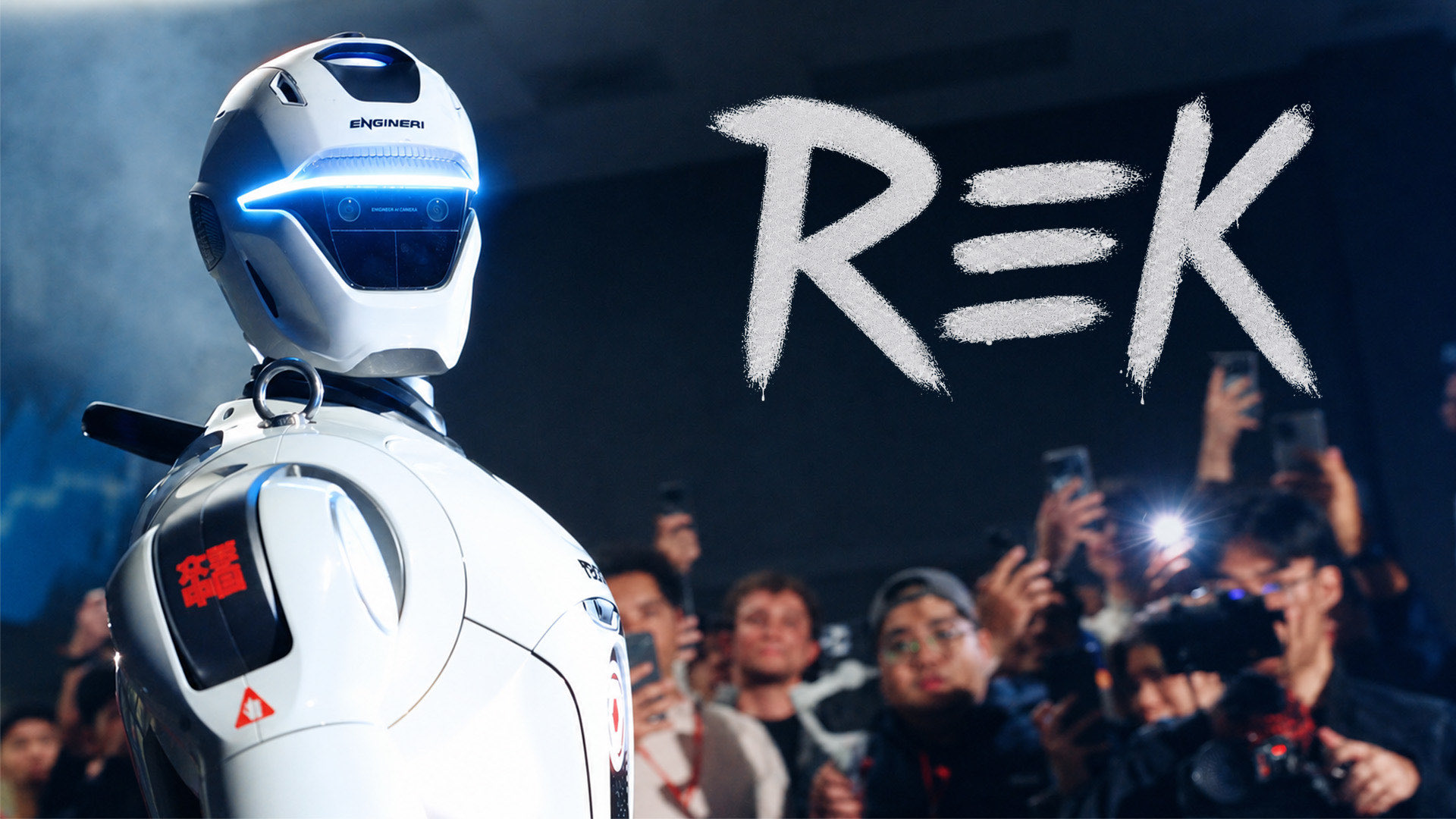
Our work with REK connects game-engine simulation with real humanoid robots. We've helped build the multiplayer simulator and piloting systems that let people train and qualify remotely before controlling physical robots. Our simulator runs the same motion policies as the real robots, and our real-time systems connect the human pilot to the machine.
This is human-directed control rather than autonomous decision-making: the trained systems handle balance and movement, while a person decides where the robot goes and what it does. It's taught us what it takes for software to hold up in the physical world, in front of a live audience, with no second take.
Same controls, real and virtual: a REK robot driven from a handheld controller in REK's workshop (top), and REK Sim on a Steam Deck (bottom). We're part of the wider REK team, helping build the simulator and the pilot controls. Video: Cix Liv / REK.
AI consultancy, feasibility and prototypes
Sometimes the useful work happens before a build. We can assess a brief or existing implementation, test whether an idea is technically viable, produce an architecture and delivery plan, or build a focused prototype to resolve the important unknowns.
An engagement might be a feasibility assessment, a technical architecture review, an independent second opinion, a prototype, or ongoing technical guidance across a project. We'll cover likely costs, latency, privacy, deployment options and the parts that don't need AI. We've done this as immersive advisors on a three-year Wellcome Trust research programme (LivingBodiesObjects) and as the technical second opinion inside agencies and studios.
You get a plan you can build with anyone, including us.
How we think about it
How we use it ourselves. AI is part of our working day, in research, code and our own tooling, applied with judgement: a person who knows what good looks like, pointing it in the right direction.
Sensitive data, handled carefully. Where information is sensitive, we assess what can run on-device or on-premises and what, if anything, needs a cloud service. The right architecture depends on the model, hardware, latency, quality and data involved, and we make those trade-offs clear before anything is built.
A person stays in charge. REK's robots are driven by people; tools like VATCheck flag uncertainty rather than guessing, leaving the final decisions to humans.
We'll tell you when it's the wrong tool. Some of the most useful conversations we have end with a simpler answer than the brief asked for.
Accessible by design. Voice, body tracking and spatial audio are also the technologies that open experiences to people a screen and controller shut out. We design for that from the start. It's why the accessibility team at HSBC commissioned us, not the marketing team.
No AI-generated images or video. Making pictures, footage or artwork with generative AI isn't what we do, and we don't offer it. We'd rather work with the artists, photographers and filmmakers who make that work than try to replace them.
Who this is for
Businesses with a repetitive, document-heavy process that a tool could take off people's hands, with a person still signing off. Studios and agencies who need a partner for the AI, physical or embodied part of a project; we're used to working white-label inside other teams' pipelines. Museums, health and education organisations with an audience who'd benefit from something they can talk to. And anyone with a question about whether AI belongs in their project at all, which is a consultancy conversation before it's a build.
Questions we get asked
- Can it run on-device, without sending data to the cloud?
- Often, yes. Where information is sensitive we look at what can run on-device or on-premises and what, if anything, needs a cloud service, and we set out the trade-off in latency, quality and cost before you commit. That includes native Android - Meta Quest headsets are Android underneath, and we've shipped on Android devices since the Channel 4 robot face in 2017.
- Which models and voice platforms do you work with?
- For real-time voice, ElevenLabs, usually with a language model from Anthropic (Claude), OpenAI or Google for the conversation. We've built experiences driven by Charisma's character dialogue, and with open models where on-device is the requirement. We pick per project; we're not tied to a vendor.
- Do you build customer-service chatbots or call-centre voice agents?
- Not as a rule. Our work is characters, companions and assistants inside experiences: VR, mixed reality, installations, health and learning apps, live events. If you need a support bot for a website, there are specialists who do that better than we would.
- Can AI characters work inside a VR or mixed-reality headset?
- Yes. Speech in, speech out, and a character that responds in real time on Meta Quest, HTC Vive, PC VR and mixed reality. The hard parts are latency, turn-taking and keeping the character in the world; those are the parts we've solved before.
- Can you work under NDA or white-label?
- Most of our AI work is under NDA already, which is why this page describes it by shape rather than by client. We regularly work white-label inside other studios' and agencies' teams and pipelines.
- Can you use AI to make sense of large collections of media or content?
- Yes. We build pipelines that run vision and language models over large collections of media and turn the results into structured findings people can review and act on, with human checks on the model output. Most of this work is under NDA.
- Do you offer consultancy without a build?
- Yes. A day, a week or a seat across a project: we assess where AI would actually help, what it would cost in latency, privacy and money, and what should run on-device.
- Can we see examples of your voice AI work?
- Most of it is under NDA, so we can't show it publicly. On a call we can talk through how those projects were built, the problems we hit and how we solved them, without naming clients.
- What does working with you look like?
- Most projects start small: a call, then a feasibility assessment, second opinion or focused prototype that answers the important unknowns before anyone commits to a full build. We agree up front who owns what, and how any data will be handled: where it's processed, where it's stored and who can see it.
- Will you tell us if AI is the wrong tool?
- Yes. We'd rather build the right thing than the fashionable one.
Something in mind?
A process that eats hours every week, a character people could talk to, a companion inside an app, a tool that needs to understand a body, a collection of media that needs reading, or just a question about whether AI belongs in your project at all. We consult as well as build: tell us a little about it and we'll come back to you.